



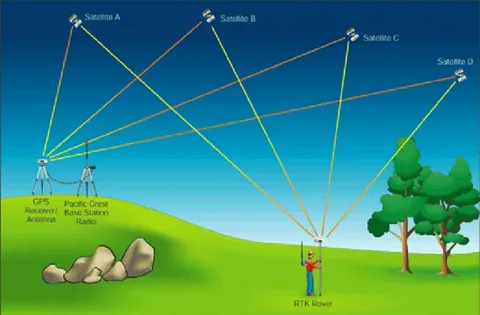
In recent years, the fields of autonomous vehicles and robotics have witnessed tremendous advancements, driven by innovations in sensing, navigation, and artificial intelligence. Among the technologies that have revolutionized precise navigation, rtk gps (Real-Time Kinematic Global Positioning System) stands out as a game-changer. Its ability to provide centimeter-level accuracy makes it indispensable in applications where precision is critical.
What is RTK GPS?
RTK GPS is an enhancement of the standard GPS system. While conventional GPS can provide location accuracy within a few meters, RTK GPS improves this accuracy to a matter of centimeters by using a network of base stations. These base stations transmit correction signals to GPS receivers on mobile units—such as autonomous vehicles or robots—ensuring precise positioning in real-time. This high level of accuracy is essential for applications that demand exact navigation, obstacle avoidance, and coordination.
Importance in Autonomous Vehicles
Autonomous vehicles rely heavily on accurate positioning to navigate complex environments safely. RTK GPS plays a critical role in:
- Lane-level navigation: Autonomous cars need precise lane positioning for safe driving. RTK GPS ensures the vehicle stays within its lane, even in GPS-challenged urban areas.
- Collision avoidance: With centimeter-level accuracy, autonomous systems can better detect and respond to nearby vehicles and obstacles.
- Path planning: RTK GPS helps in real-time route adjustments, ensuring smooth and safe travel, particularly in environments with dynamic obstacles.
By integrating RTK GPS with other sensors like LiDAR and cameras, autonomous vehicles achieve higher levels of reliability and safety.
Role in Robotics
Robotics, especially in industrial and agricultural applications, benefits immensely from RTK GPS. Robots performing tasks such as automated planting, surveying, or warehouse logistics require pinpoint accuracy to optimize operations and reduce errors. RTK GPS enables:
- Precision movement: Robots can navigate predefined paths with minimal deviation.
- Coordination of multiple robots: In environments like warehouses or construction sites, multiple robots can operate simultaneously without collisions.
- Enhanced data collection: Surveying and mapping robots rely on precise GPS data to create accurate models of their surroundings.
In essence, RTK GPS extends the capabilities of robotic systems, allowing them to perform complex tasks autonomously and efficiently.
Challenges and Future Prospects
Despite its advantages, RTK GPS is not without challenges. Signal interference, multipath errors in urban environments, and dependence on base stations can limit performance. However, ongoing research aims to integrate RTK GPS with satellite augmentation systems, advanced inertial navigation, and AI-based error correction to overcome these limitations.
The future of autonomous vehicles and robotics will increasingly rely on RTK GPS to ensure precision, safety, and efficiency. As technology evolves, RTK GPS will continue to be a cornerstone of autonomous navigation systems.
Conclusion
The role of RTK GPS in autonomous vehicles and robotics is crucial for achieving centimeter-level accuracy, safe navigation, and efficient operation. Its integration with other sensors and technologies is shaping the future of autonomous systems, enabling smarter, safer, and more reliable machines.
